Remember when some day in 1998 the single ´When You´re Gone´ dropped? I was about 9 years old then and in my class there was a culture war of sorts going on. It was the Backstreet Boys versus the Spice Girls and you had to pick sides! For obvious reasons, us being 9 year olds and uninterested in the opposite sex, most boys were in camp BSB and most girls were in Spice World. Well not me. From the first single Wannabe I thought the Spice Girls were a lot more interesting. The band was a prime example of a heavily commercialised girlgroup, but the songwriting and imagery was splendid. A lot of boys thought I was lame for liking the Spice Girls, some even called me gay for it (really? you're the ones liking a boyband!) but it didnt bother me much. I was all in on Geri, Emma, Mel B, Victoria and of course Melanie C. I had their poster hanging in my room, got the albums and I saw Spice World: The Movie in the theater.
But the culture wars did not end there. Within camp Spice you were given the difficult task to choose your favorite Spice Girl and once again, you couldn't pick two! I remember liking Emma, a.k.a. Baby Spice a lot at first. I liked Geri Halliwell too. She seemed to be the rebellious one of the bunch (and the most artisticially involved in the songwriting process, I would learn later). However I tossed and turned, Melanie C always seemed to fly under my radar. She spent the first 2 years in the shadows of her groupmates. Geri and Mel B were known as the troublemakers. Very skillful at making tabloid headlines. On the other side you had Emma and Victoria, filling in the more traditional feminine roles. Melanie C was left somewhere in the middle. Perhaps you could call her the sane one. Surely she was the best singer, but most people did not like the Spice Girls for their singing.
Mel C's status changed in november 1998 when she dropped 'When You're Gone' with Bryan Adams. It was a smash hit, one of the 100 best sold singles of the 90s, and it helped Melanie C take the spotlights. For me it was the first time I really noticed what a great voice she has and how she was actually kinda cute. The song is still a huge banger (I've been playing it on repeat this morning, hence my writing this blog entry) and I love just how much vocal chemistry Bryan and Melanie have. The song was a turning point for Melanie's career and the final blow for the Spice Girls as a group. After Geri's departure a lot of the energy was gone, but the remaining members went ahead to record a third Spice Girls album. If you watch or read interviews from that era it is clear that Mel C just wasn't into it anymore. After she announced her departure from the band the Spice Girls were over and Mel C went on to have a pretty succesful solo career. Certainly the most succesful of all the members.
In 2022 Bryan and Melanie re-recorded and released their hit song. It was accompanied by a great clip of them performing in slow motion (see below). It just shows how much the song meant to them and to their fans. 'When You're Gone' was a milestone in pop music history. It was the moment when I finally picked camp Sporty Spice where I still reside today.
#8 - August 11th 2026 - Stinking my way through a Dry Spell
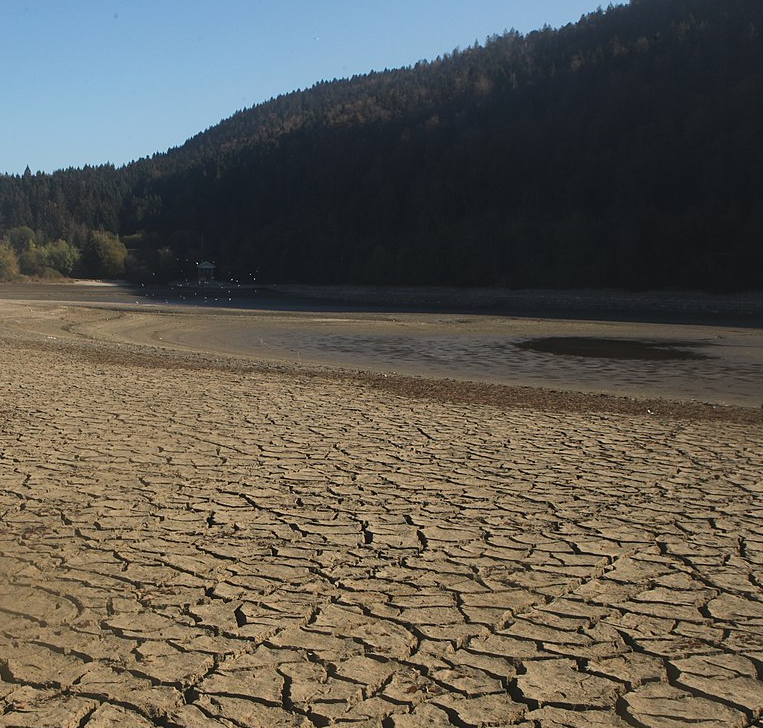
This summer is the dryest I have experienced in my lifetime. Precipitation is approaching an all time low record, river water levels are so low that we're keeping locks closed to keep sweet water from flowing into the sea too fast and for the first time in my life I actually miss the rain. Coming from one of the rainiest, shittiest weather countries in the world I never thought I could miss something that has been so omnipresent in my life. The lack of rain also is a reality check for certain assumptions I had about my country. For example, I used to think that The Netherlands were a pretty clean country. Not the cleanest country mind you, but overall a fairly clean, well kept place. However this dry spell is making it painfully obvious that frequent precipitation is also an excellent cleanser of streets. In recent weeks I've noticed just how many streets and alleys smell like piss when it didn't rain for a while. I even smelled a few escalators that smelled like urine. Which makes me wonder, who out there has the nerve to take a piss on an escalator?
In short, this summer has been both a humbling and sobering experience. Next time when I go to Spain, or Italy or anywhere with dry summers I will appreciate the lack of stink a lot more. Of course all of this is extremely worrying in the context of climate change. Summers like these are going to become a lot more common, perhaps even the norm. Forest fires are going to keep us busy, which is particularly a problem because they need lots of water to put out. Weather experts also warn that hot, dry summers are often followed by longer periods of intense rain with more floods. The increasingly hot sea water is causing fish and other sea life to behave differently, creating further disruptions in the ecosystem. I find it quite terrifying to see climate change unfold into climate disaster like this. And this is only the beginning. Things are going to get a lot worse from here.
I understand that generations after me are pretty pessimistic about the future, but I do not share the sentiment. I believe that ultimately planet earth is better off without humans. Humans, with some exceptions here and there, are programmed to conquer, to destroy and to exploit and this will never change. I often wonder what humans are on a grander scale and without trying to sound too melancholic, think of us as a tumor, or a virus that has grown out of control and sickening its host, our planet. However, thinking that human wrongdoing has the ability to destroy Earth seems arrogant too. Humans are but a blimp in history and Earth will live on for billions of years after us. Plenty of time to recover and hopefully naturally select a better species. One that has balance and peaceful coexistence programmed into their genes and, if it's not too much to ask, one that doesn't piss in the streets during a dry spell.
#7 - August 3rd 2026 - I'm Getting too Old for Waterparks
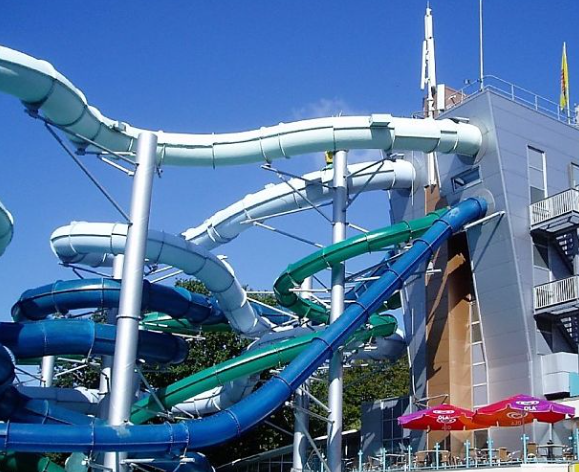
This weekend we took our kids to an indoor waterpark. Since we're not going abroad this summer, we thought we'd take them here so that they'd have at least some joyful memories looking back upon this vacation. To make a long story short: my kids loved it, but my wife and I were confronted with our declining bodies during this day. My oldest son is eight and has gotten all his swimming diplomas last year. My youngest is five and just recently started his lessons. My oldest wanted to ride all the crazy extreme slides all day long, he couldn't get enough and wanted us to come along, so I naively did.
When you get older it becomes increasingly hard not to think about the risks of thrillseeking. The first couple of slides I was fine, but as I got to the more extreme ones I became aware of my own mortality. The speeds you reach going down those waterslides are actually insane! Often I felt completely out of control, just waiting for the ride to finish, hoping not to get hurt along the way. My wife felt the same after she landed in the water upside down, resulting in a headache that lasted the rest of the day. After about 2 hours in the park my balance organ started protesting. I felt nauseous and dizzy on the slides and I had to call it quits. This was a bit of a dissappointment for my son, but he just kept going on by himself as I hung out with my youngest while he played happily in the shallow pools.
The thing is, this was the very first time in my life to visit a waterpark. Somehow my parents never took us and as a teenager I never felt the desire to go. It is a sad realization that the very first time you visit a place it turns out that you already missed the peak time in your life to go. The next day I woke up still feeling exhausted, muscles aching everywhere and wondering what other ships in life had already sailed for me.
#6 - July 20th 2026 - No More Letterboxd For Me
Around new years eve I made a Letterboxd account for myself. Being the movie geek I am I was drawn to the platform. I guess looking for connections through shared hobbies is enough for anyone to sign up for anything. The first thing I did when I made my account was trying to list all the movies I have watched in my lifetime. It sure was a fun trip down memory lane. It turns out that I have already seen more than a 1000, which was suprising for me. Compared to some power users on the site, 1000 is nothing though. It did make me feel smaller, like somehow I was less of a movie person compared to them.
The second thing I did was keep up a film diary. For a couple of months I logged all the films I saw. The result was a colorful list of diary entries, I somewhere down the line I decide to watch all James Bond films in chronological order because they were added to Netflix, only to find them being taken off the platform within 4 months (yet another reasons to own physical media). I got as far as Diamonds Are Forever if you care. When comparing my film diary to others, I noticed once again that there were plenty of users watching movies more dilligently than I did. Some people have multiple entries per day! Where do people find the time for stuff like that?
A well known side effect of social media, all the way back to Facebook, is that people tend to post only the best parts of themselves and blow up performances for online approval. This leads to unfair comparisons and insecurity by other users, friends, followers, however you want to name them. Letterboxd unfortunately suffers from this same dynamic. There is a weird kind of competitive atmosphere on Letterboxd. Films watched become little badges you can wear to signal others that you have great taste. Working your way through the most popular film lists becomes a task that needs to be completed, but nobody really knows why. Film watching, through Letterboxd, turns into a very performative pasttime. You feel pressure to 'complete' films, rather than to enjoy a great movie experience from time to time.
However, what I disliked the most about Letterboxd, was the user review section. Why is it that the first 25 reviews for every film are ironic, snarky one-liners? I think a lot of it is virtue signalling. Folks leaving comments down at "Gone With the Wind" to let the world know how outdated 1939 has become to me seems like taking a cheap shot for internet points. I came to the platform hoping to read other peoples sincere thoughts about films we both saw, but the fatal mistake I made in the process was forgetting that being sincere has become the hardest thing to do.
The final straw for me, the one that broke the camel's back, was my realisation that once again I was spending more time than I wanted on the platform. And so we come full circle. Social media, without exception, need our attention to survive. It means that when I would finish updating my film diary, the thing I came to do, I would hang around 10-15 minutes scrolling down other users' watchlists, reading and getting irritated by, snarky one-liner reviews and feeling insecure by the insane amount of films some people manage to watch in a day. That's when it became apparent that I had fallen victim to yet another social media trap. Because I did not feel any closer to people on the platform. If anything I felt lonelier. I realised that the only thing I really enjoyed doing on Letterboxd, can be done on any notepad app. Sure, there will be nobody to look at my 'accomplishments', sure I won't be able to add little icons to the list, or choose to make all the icons in black, or red, because apparently color coding your movie lists is a thing some people like to spend hours doing. I won't be able to do any of those things, but I don't need to either. Those activities are simply the tools Letterboxd has implemented to increase their users Time On Device.
#5 - July 7th 2026 - The World Cup
As we speak we are nearing the end stage of the 2026 Football World Cup. Being European and male, one is almost required to take somewhat of an interest in football. Football is woven into European society, particularly in working class communities. The happiness of the people often correlates to whether the local FC was able to win or not. As for me, I have gone through several phases when it comes to caring about this sport. When I was a child my parents let my try out for football, but I hated it. It disappointed my father, a disappointment I'm not sure we have ever recovered from, but eventually I started doing other sports that I enjoyed slightly more. When I was in high school I noticed that being able to talk about football was a prerequisite for belonging, so I did what most insecure teenagers would do. I started watching football on television, learning about the teams and players and before long I actually enjoyed watching the game. There are things genuinely fun about this sport. I enjoyed playing the FIFA games on my Gamecube back in the day a lot as well.
In recent years my interest in football has gradually faded into what it is today. I hardly watch a game anymore unless it is a World Cup event or perhaps a Champions League final. I like to see our Dutch teams perform internationally as well, although more often than not they don't stand a chance against the top teams from England and Spain. I largely do not care for football anymore and the main reason is that the whole game has been ruined by money. A game that is supposed to be rooted in local communities is completely out of touch today. The Champions League has become entertainment for the entire world and the entire world wants to see Liverpool play Real Madrid, not PSV versus FC Kopenhagen. As a result, most of the money flowing into the sport ends up with about 16 teams. As for me, a casual viewer who just wants to support his local Dutch teams, I am completely tuned out.
Another problem is the blatant corruption going on within FIFA. Yesterday they unsuspended an American player because Trump wanted it so. We all knew that FIFA was a corrupt bunch, the World Cup events in Qatar (2022) and Saudi-Arabia (2034) tell you all you need to know, but this is taking things to the next level. The World Cup has already lost a lot of its shine by increasing the amount of participating countries from 32 to 48. I'm sure Panama and Haiti were happy to be a part of this tournament, but the difference of skill between them and the stronger countries was immense. All of this just to be able to have more matches, sell more tickets (for ridiculous prices) and run more ads. Not to even mention the 'hydration breaks' that are just commercial breaks. It's sad how this sport has utterly and completely been sold out to capitalism.
#4 - June 30th 2026 - I Love Nothing
My favourite thing to do in the world is nothing. Ever since I was a child I would look up to my retired grandparents and how their life just seemed infinitely better than mine. They could just spend every day at their own pace, doing whatever they felt like doing. When I was about 8 years old I had a pretty severe case of pneumonia and had to stay home from school for about six weeks. It was then when I escaped the matrix and realised how amazing it is to do absolutely nothing. I was free to watch morning cartoons when everyone else went to school. I experienced the silence in the house when other people went to work and school and as I recovered gradually regained the energy to focus on creative things during the day.
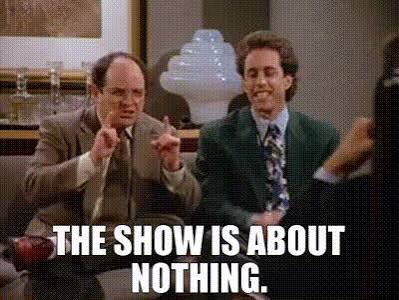
One of my favorite sitcoms of all time is Seinfeld, the show that takes pride in the fact that it's about nothing. Jerry, through his work as a stand up comedian, lives a life relatively out of the matrix. This nothingness allows him the freedom to observe the world around him clearer than others. And so nothing eventually always becomes something. Seinfeld is not literally about nothing. It's about the little things in life turned big. Its about placing the social glue into the spotlight.
See, I don't literally like to do nothing. I just don't like to be told what to do. To me nothing means no obligations, no production targets and no deadlines. Being free of those constraints allows my brain to wander freely, to think new thoughts and be creative. It allows me to dive deep in something that interests me on a particular day without having to turn that knowledge into something productive. Unfortunately I am in the stage of my life where obligations are rampant. I desperately long for a free afternoon to let my mind wander. Sometimes I even articifially create a free day, by postponing my work, only to have to work twice as hard the following days to catch up. For now it has been worth it. Surely this website would be a lot more barebones if I didn't slack off every now and then. On the other side, I have to admit that having obligations at certain times makes life more meaningful. Raising children is probably the hardest thing I've ever done, not because it is that hard, but because it's seemingly never ending. Still, I couldn't imagine life without my kids.
When it comes to work and studying though, I don't think I was cut out for it. I remember how much going to university drained the life out of me. When I finally graduated I swore I would never study again. I held on to that ambition for almost 10 years. Now I'm doing this work related course that took several months and I thought I was done with it, but now I got some feedback on my assignment and they want me to rewrite a bunch of things. It's moments like these when I feel the most like I just want to run away from all obligations and fucking do nothing. Why is life like this? With some exceptions, most people have the choice to either make a living and be miserable and see your life rush by without having the time to do what makes life worth living, or be unemployed, have plenty of free time but lack the funds to be able to do anything worthwhile. Maybe the take away message here is that modern life is just unfair by design. Or maybe I'm just leaning heavily into my avoidant coping right now and I'm telling myself that I want to hear.
#3 - June 16th 2026 - The Bricks and Minifigs scandal is everything wrong with the world right now.
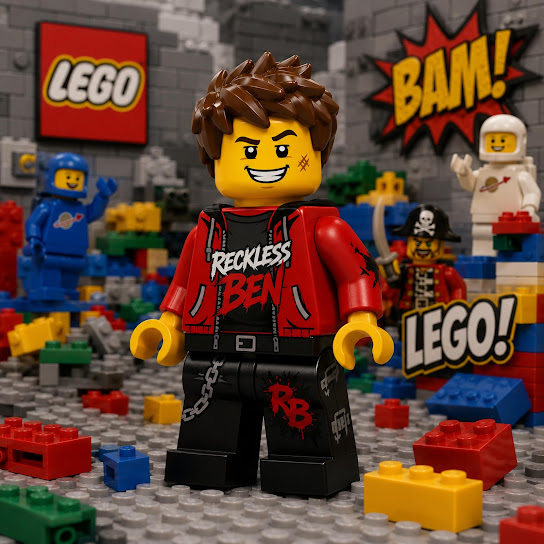
I have been following this Bricks and Minifigs scandal from a safe distance and it is really a clusterfuck of immense proportions. Like most people I was hooked by the Reckless Ben videos my Youtube algorithm recommended. Ben’s ‘reporting’ of the situation is a confirmation of the pathetic media landscape we are living in today. He takes every opportunity to create shock value and acts in ways that will inevitably tick BAM off. This is not a way to investigate a crime, nor is it a way to resolve a conflict. This is trial by media and most of all, this is going to extreme lengths to generate views because the algorithm still rewards divisive content. Also, getting millions of views is the only way to make a living off of being a Youtuber. This will surely come across as victim blaming, but if I knew Brian Mansell I would tell him: Well if you ask a Youtuber to get your Legos back, this is what you get.
Then of course there are the BAM bros. Rarely have I seen such a bunch a real life cartoon villians. Also, never have I seen people lie so compulsively on the record. They simply change their story a little bit whenever a new piece of information is dropped and they seem to be perfectly comfortable doing it. This is a disease of the post-truth era we live in. Society’s values have eroded so much that you can literally get away with lying through your teeth at every twist and turn. I think the most interesting yet terrifying thing that Reckless Ben uncovered in his videos is the organized crime ring behind vintage Lego sets, which is somehow controlled by the Mormons and those same Mormons have the local police department completely in their pockets.
Last night I watched the Coffeezilla report. I gotta admit that I normally don’t like Coffeezilla for his sensationalist reporting but compared to Reckless Ben he was actually trying to investigate the case. His video shows how the whole operation that the BAM franchisers ran was messy and chaotic, which makes you feel sorry for Brian Mansell for trusting these people with his father’s assets. At the same time the U-Haul story is incredibly suspicious and is pretty much evidence that at least some of the inventory was stolen by Brandon Best and Joshua Johnson. The truth is that in this case all involved parties dropped the ball at some point causing said clusterfuck. Compliments to Coffeezilla for coming to this nuanced conclusion!
All in all the whole situation just makes me depressed. The BAM scandal is a scale model of pretty much everything wrong with the world right now. Blatant corruption and organized crime that goes unpunished, a bunch of people getting greedy over an old man’s rainy day fund and a impulsive Youtuber looking desperately for shock value, setting the whole thing on fire after he was asked to help. A true crime story that is watched live by millions of people online as it unfolds and has created an entire ecosystem speculative click-bait content on Youtube. Last but not least, let's acknowledge that all of this is happening because we live in such an uncertain economic era that adult people start treating children’s toys as investment objects, completely ripping these Legos from their intrinsic values. Surely, wherever these Lego sets are now, most of them will remain forever in their boxes.
#2 - June 4th 2026 - NHK World is my favorite propaganda channel
Something you probably don't know about me is that I like to collect and watch IPTV channels. My interest in IPTV goes all the way back to my childhood. Before I was an internet kid, I was definitely a television kid. Growing up in the 90s without an internet connection, television was my window to the world. Looking back I had a somewhat obsessive interest in television. I have old notebooks from my childhood where I would list all the channels we could receive. I even role-played having my own TV channel and all the things I would do during a day, like playing with Lego, playing with action figures or even having dinner, were all TV shows on my channel. I have been pondering on which exact mental disorder this behavioral qualifies as, but for now I will leave it at having a lively imagination.
My parents used to have friends who were satellite TV hobbyists. I remember loving to go to their house to watch the satellite TV. They also had a waterbed which they let me play on. They could just switch the position of the satellite and receive hundreds of channels from all over the world. I asked my parents for a satellite dish but they didn't see the point of it (in retrospect, they were right). When we went on holiday abroad. The first thing I did when arriving at our hotel or apartment was turn on the TV to see which channels they had. I spent afternoons with my sister watching cartoons and commercials in a language I did not understand. Somehow it didn't matter.
A couple of years ago, when I finally became a full fledged adult with their own house and all, I remembered the satellite thing and started fantasizing about having a dish again. Of course a lot has changed in 30 years and satellites for the purpose of watching foreign television have become entirely redundant. IPTV is cheaper, hassle free and gives you access to a lot more channels potentially. So I bought myself an set top box of the brand Formuler which runs Android and started fiddling around with it. Another thing you probably don't know about me is that I hate paying for stuff, so I don't take subscriptions to illegal IPTV providers. These shady businesses give you thousands of IPTV channels, usually for a monthly or annual fee. My style is looking around on Github where people share their IPTV playlists for free. I compose my own playlists using notepad with a minimal amount of coding, upload the document as an m3u file to my IPTV software and we're ready to go!
The thing about IPTV channels is that many of them don't remain online for very long. Copyright infringement matters and all. The exception to this rule are so called free-to-air channels. These are channels, often tax funded, which run without the immediate purpose of making money. In many cases, these are news channels and those channels are the backbone of my IPTV playlist. No matter how long I'm gone, I can always come home knowing that CNN, BBC World, Deutsche Welle, Al Jazeera and the likes will be waiting for me. My favorite free-to-air channel is without a doubt NHK World. The international arm of Japan's public television network is a breath of fresh air. In addition to bringing the latest news about Japan in English, they constantly run programs from regular NHK, often subbed or dubbed into English. NHK World is a weird kind of slow TV for me. Some of my favorite shows, like Document 72 Hours, Somewhere Street, Railway Journal and even the Sumo tournament highlights have meditative qualities. I love the narrators voices, the little 5 minute clips of nature they use to fill in the gaps between shows, even the song they play during the weather report is easy on my mind.
Of course, the ultimate purpose of a free-to-air TV channel does not go over my head. NHK World is essentially a propaganda channel that wants to convince me of what a great country Japan is. In the same way Russia Today and CGTN try to do this for their respective countries. Still I often find myself tuning into NHK World when I had a stressful day and need to unwind.
#1 - June 2nd 2026 - Watching Ranma 1/2 in 2026
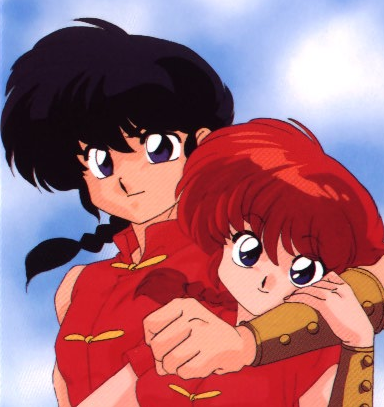
I've been watching the original Ranma 1/2 for the first time on Tubi and the experience evokes all kinds of thoughts and emotions in me. As you might know I spent a lot of time on archived Tokyo Geocities pages over the last year and the amount of Ranma fanpages was really surprising. Maybe it suprised me because Ranma never got aired in The Netherlands, unlike Dragonball, Gundam Wing and Sailor Moon. Based on the amount of fanpages Ranma is only outnumbered (by a street length) by Sailor Moon. When I watch Ranma, to be honest, half the time I'm wondering if there is even a point to this show. The episodes are very, very slice of life. The characters seemingly don't have much of an arc and its sitcom style approach ensures that whatever lessons are learned at the end of an episode will be all but forgotten on the next one. The stories and gags are often repetitive as well.
Ranma's strength is its colourful cast of characters. There is also plenty of typical Japanese humour which I have grown to appreciate over the years. There is just something inherently funny about Ranma's dad turning into a giant panda at the most inconvenient times. There is also a painful irony in Akane not noticing Ryoga unless he turns into a cute little pig. Ranma also does a lot in terms of nostalgia for me. From the animation style, to the casual nudity, to the 'rainy summer evening' soundtrack. When I watch Ranma I can't help but feel a bit sad for a bygone era. But also, the longer you watch Ranma, the more you will find that there is character development going on. People gradually learn to accept one another, even love another and most of all, people learn to love themselves.
People like to discuss whether or not Ranma is a queer show. Author Rumiko Takahashi has always denied this, even going so far as to say that her stories are about relationships between men and women. Critics are very mixed in how they label this show. Some calling it conservative and confirming of traditional gender roles, while others point out that the show was probably as queer as mainstream media outlets would allow in late 80s Japan. The impact that Ranma 1/2 had on 90s Western queer teenagers, however, is undeniable. Ranma was the first character appearing on television that they identified with. Perhaps even the first character that allowed them to think of themselves in non-binary gender ways. I too lean toward the opinion of Ranma's queerness being unintentional, but at the same time I believe it does not matter one bit. Isn't the beauty of art that people can find meaning in it beyond the artists own intentions?
I would even go as far as to say that the unintentional queerness of Ranma is its main strength. Especially when you compare it to today's media landscape. Where studio executives try to shoe-horn gay or trans characters into shows because it would do well on test audiences. Truthfully, an openly queer anime would have bombed on mainstream TV in the 90s. Ranma's subtle, beating around the bush approach, was as good as it got. Takahashi wasn't trying to make you feel anything in particular and that is why you feel something sincere when watching this show.